
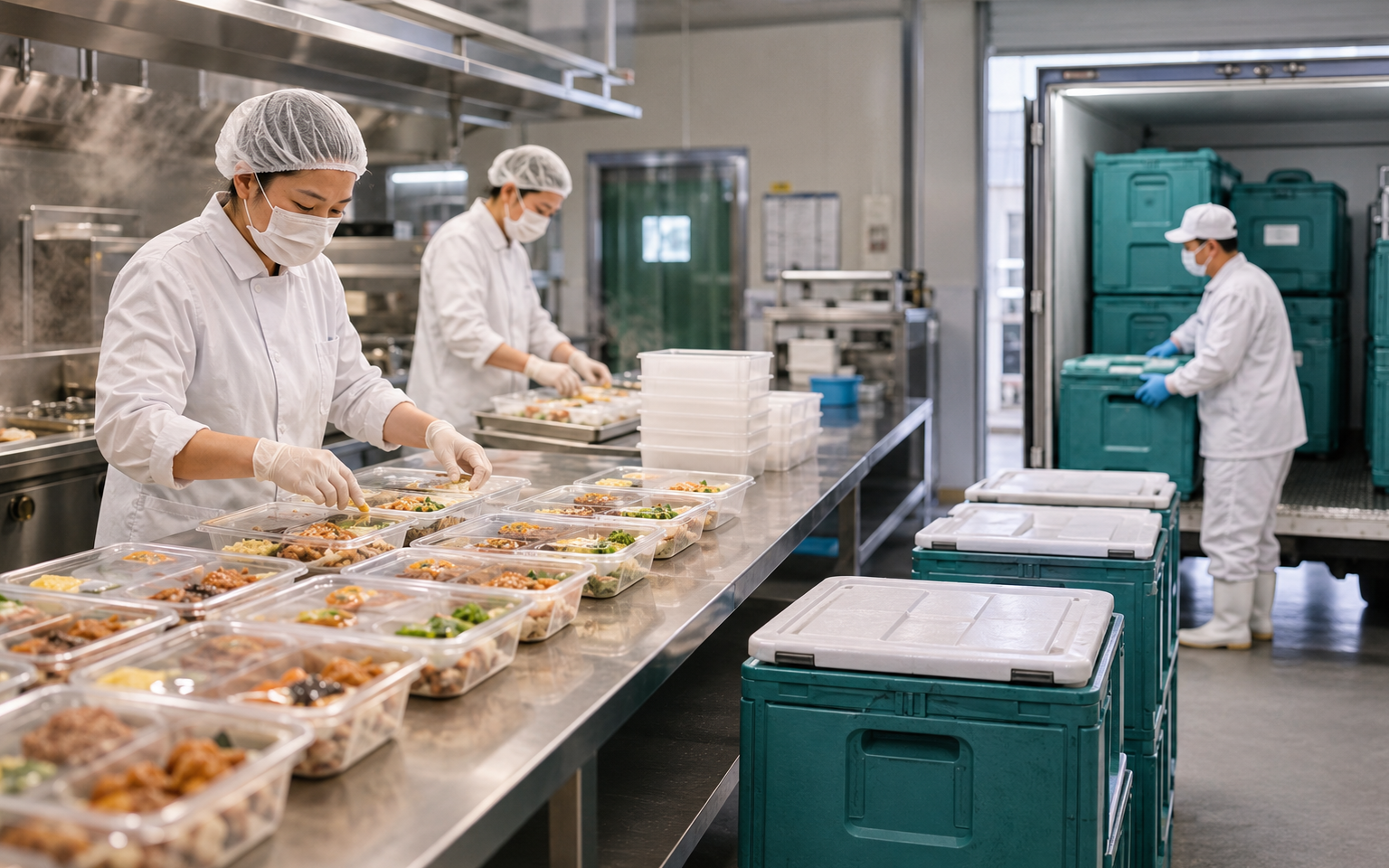
Bringing a prepared dish from concept to full-scale production is not as simple as finalizing a recipe and scaling it up. The environment of a restaurant kitchen and a food manufacturing facility differs significantly in equipment, ingredient handling, heating methods, packaging, and storage conditions.
To ensure that a dish maintains consistent taste, portion size, and reheating performance at scale, it typically goes through several stages, including requirement definition, sample development, in-kitchen testing, pilot production, quality validation, and finally mass production.
Step 1: Defining Product Requirements
Before development begins, it is essential to clarify the intended use case of the dish.
The same dish may require very different specifications depending on whether it is used for dine-in, takeout, or catering. The development team needs to understand the restaurant’s target customers, price positioning, portion size, spice level, side components, packaging format, and intended reheating method.
For example, will the dish be plated directly after reheating, or will chefs add vegetables or sauces for secondary preparation? Will it be reheated in a wok, steamer, or hot water bath? These details directly influence both formulation and production processes.
Step 2: Sample Development and Basic Taste Confirmation
Once requirements are clear, the R&D team develops the first round of samples based on the dish direction.
At this stage, the focus is not only on whether the dish “tastes good,” but also on adjusting saltiness, spiciness, aroma, sauce concentration, meat-to-vegetable ratio, and portion weight in a precise way. Restaurants can provide feedback based on their menu positioning, and multiple rounds of refinement are often required until the core flavor profile is established.
Taste confirmation must also go beyond freshly cooked results. Prepared foods must go through cooling, packaging, storage, transportation, and reheating. Therefore, it is necessary to evaluate whether the flavor and texture remain consistent throughout the full process.
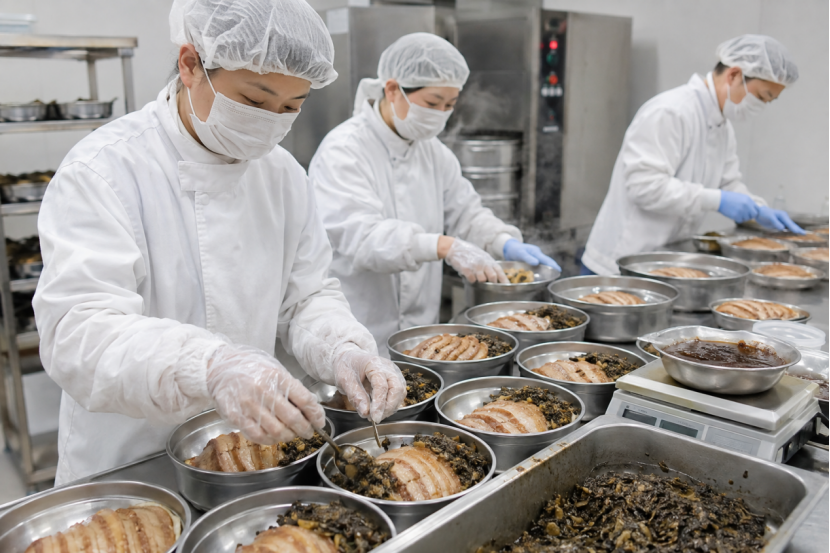
Step 3: Simulated In-Kitchen Reheating Tests
After the initial sample is approved, the product must be tested under real restaurant operating conditions.
The R&D team reheats the product using agreed-upon equipment and methods to evaluate whether the meat texture changes, whether the sauce becomes too thin or too thick, whether side ingredients affect the overall taste, and whether color and aroma remain stable after reheating.
This stage also evaluates operational efficiency. Even if a dish tastes good, it may not be suitable for peak-hour service if it requires too many steps, complex seasoning, or long preparation time. A balance must be achieved between flavor quality and kitchen efficiency.
Step 4: Moving from Sample to Pilot Production
Approval of samples does not mean the product is ready for large-scale production. A pilot run is usually required before full production.
In small-batch kitchen trials, chefs can rely on experience and flexible judgment. However, in large-scale manufacturing, these practices must be converted into standardized, repeatable processes, including ingredient specifications, ratios, production sequence, processing time, final weight, and packaging method.
The purpose of pilot production is to verify whether the recipe remains stable when scaled up. If there are deviations in taste, sauce consistency, or weight uniformity, the process must be adjusted before moving forward.
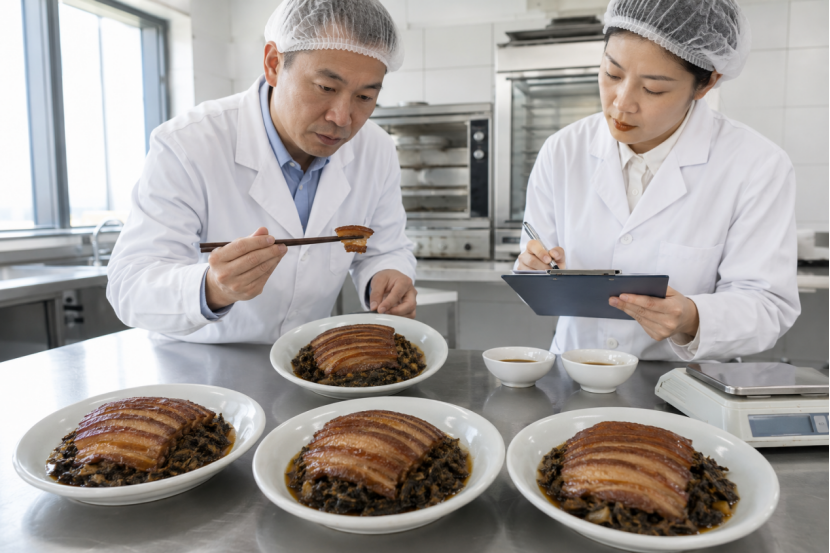
Step 5: Packaging and Logistics Validation
Packaging affects not only appearance but also storage, transportation, and kitchen usability.
Different dishes require different packaging formats based on product characteristics. It is also necessary to evaluate sealing integrity, portion weight consistency, and reheating convenience. For products supplied to U.S. restaurants, transportation distance, cold-chain coordination, carton specifications, and restaurant storage capacity must also be considered.
After packaging is finalized, the product is tested under real storage and shipping conditions to ensure it still performs as expected upon arrival and reheating.
Step 6: Full-Scale Production After Quality Approval
Only after passing taste, reheating, pilot production, and packaging validation can a product enter standardized mass production.
During mass production, every batch must follow established specifications and undergo quality checks, focusing on raw material condition, processing consistency, product weight, packaging integrity, and final output performance. Batch traceability is also maintained for quality control and future review.
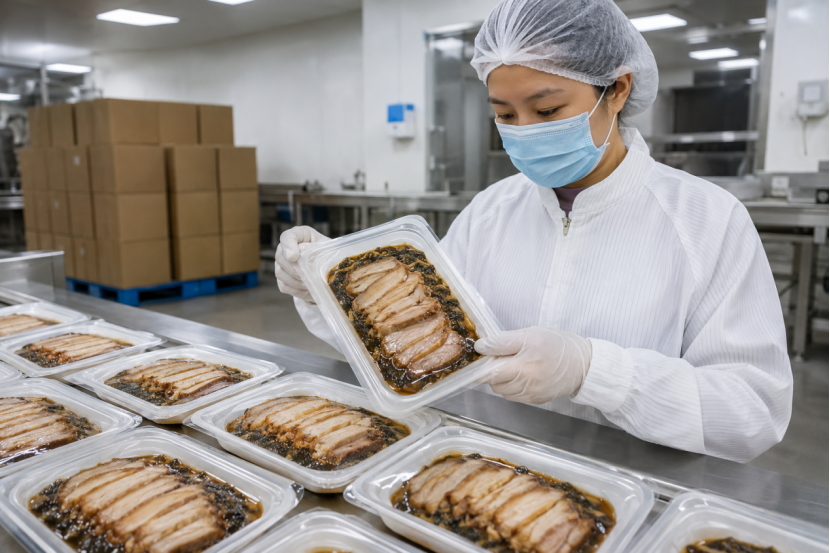
Mass Production Is Not the End, but the Beginning of Continuous Optimization
Once the product is introduced to restaurants, real-world feedback from kitchens and customers becomes essential.
If a restaurant changes equipment, adjusts its menu, or modifies portion sizes, the product may need to be retested or optimized. A truly reliable prepared dish is not only one that tastes good during initial testing, but one that remains consistent across every reheating, every serving, and every production batch.
From taste confirmation to mass production, the process is essentially about transforming a chef-dependent dish into a standardized, repeatable product. Only by refining each step can prepared food truly help restaurants reduce prep work, improve efficiency, and maintain consistent quality.